
Nestle Nigeria: Championing a sustainable safe drinking water for all

By Amechi Obiakpu
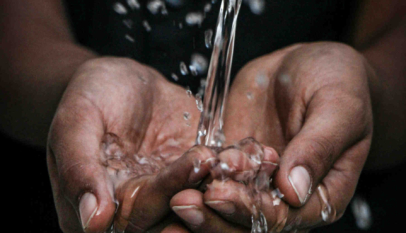
Consuming safe drinking water has several benefits, including preventing severe waterborne diseases, sustaining overall cellular health and maintaining optimal biological functions.
And, access to the water is key to ensuring that all these benefits are ascertained.
For Nestlé Nigeria, these are at the core of it’s vision when it commissioned eight climate-smart boreholes and water treatment plants in communities within the Agbara catchment in Ogun State, recently.
The facilities aimed at improving access to treated water and helping communities reduce their exposure to unsafe water and the health risks associated with contaminated water supplies.
The Water Regeneration Project was structured around four connected pillars: Water Access, delivered through climate-smart boreholes; Water Quality, supported by treatment plants, routine monitoring, the National Water Quality Advocacy Campaign and practical water safety guidance; Water Conservation, advanced through rainwater harvesting systems; and Water Governance, strengthened through community water, sanitation and hygiene (WASH) committees and governance training. These measures provide local oversight, clarify responsibilities for safe operation, preventive maintenance, fault reporting and water quality checks, and strengthen community ownership to protect the long-term value of the infrastructure.
Nestle Nigeria as an enable
For the beverage giant, the water regeneration project links measurable community impact with watershed resilience, responsible water management and business continuity. It provides an integrated model in which infrastructure expands access, treatment safeguards quality, rainwater harvesting supports conservation, advocacy strengthens stewardship and local governance sustains performance.
What experts say
According to experts, ensuring water source is clean and free of contaminants provides critical physiological advantages that keep one’s mind and body functioning at their best.
According to the World Health Organization (WHO), microbially contaminated water can transmit dangerous illnesses such as cholera, dysentery, typhoid, and polio. Unsafe water contributes to more than 505,000 diarrhoeal deaths annually worldwide.
In Nigeria the figure is staggering.
According to UNICEF Nigeria, over 70,000 children under the age of five die annually in Nigeria from diarrheal diseases linked to contaminated water and poor sanitation (WASH).
Access to safe water cuts these infection and mortality rates drastically. The World Bank and Dataphyte report, put it straight: approximately 70 million Nigerians still lack access to basic safe drinking water.
Conversely, at least 1.7 billion people globally still use water sources contaminated with feces.
Bringing succour
To change that, Nestle Nigeria with the water for all initiative is hoping to change the narrative, one community at a time.
The Agbara water commissioning forms part of Nestlé’s wider Water Regeneration Project, covering 24 climate-smart boreholes in the Agbara, Ogun State, and Abaji, Federal Capital Territory catchment, alongside water treatment, quality monitoring, rainwater harvesting and community-led management..
For Nestlé Nigeria, this resulted from its 2024 water stewardship strategy and plan roadmap. According to the plan, Nestle said water affects and connects every aspect of life and stewarding those invaluable shared resources is at the centre of its sustainability.
“This is why sustainably managing our impact on water in our operations and along our value chain is therefore an important part of our corporate business principles and sustainability priorities”.
To this end it adapted its water stewardship plan to the requirement of the the Alliance for Waste Stewardship (AWS) standard and have developed actions onsite and at catchment level that support the five outcomes of the AWS standard including Safe water, sanitation and hygiene for all (WASH); Important water related areas: Good water quality status: Good water quality governence and sustainable water balance.
It says, it will help to address: provision of access to safe drinking water in the host community and reduction in water consumption in its operations through identification and implementation of water saving projects. Robust monitoring and maintainance of its boreholes to ensure that there is no impact on groundwater supply among others.
To achieve this, the “Good life brand” says collaboration with relevant stakeholders is crutial to the water stewardship efforts in addressing identified water challenges within the catchment area and beyond.
Reactions
Speaking at the commissioning, Olutayo Olatunji, Business Executive Officer, Nestlé Waters and Premium Beverages, Nestlé Nigeria Plc, said: “The Agbara commissioning is an important milestone within our wider Water Regeneration Project and reflects Nestlé’s commitment to helping regenerate local water cycles. By combining treated water infrastructure with local governance and performance monitoring, we are creating a model that improves access, strengthens watershed resilience and delivers enduring value. As we finalise the remaining scope, our focus remains on rigorous delivery and measurable outcomes that benefit communities and support business continuity.”
Also Speaking on the project, the Honourable Minister of Water Resources and Sanitation, Engr. Prof. Joseph Terlumun Utsev, said: “Commissioning a facility is only the beginning; ensuring that it continues to provide safe, reliable and sustainable service is the true measure of success. It is encouraging that this initiative places strong emphasis on governance and water stewardship through the development of a governance training manual for water regeneration and stewardship,” the minister said.
On his part, The Honourable Minister of Environment, Balarabe Abbas Lawal, added: “This project demonstrates what strategic public-private collaboration can achieve. By working with regulators, local authorities and host communities, Nestlé has supported an ecosystem for sustainable and equitable access to safe drinking water. The initiative advances Sustainable Development Goal 6 and aligns with Nigeria’s environmental priorities.”
Welcoming the project on behalf of the host community, His Royal Majesty, Oba (Barr.) Lukman Jayeola Agunbiade, Olute III, the Alagbara of Agbara Kingdom, expressed his gratitude even as he highlighted the full benefit of the project to the community: “Today is a day of gratitude for the people of Agbara. Safe water touches every part of our lives: the health of our children, the dignity of our homes and the hopes of our families.
“Today, it has come closer to all of us. But Agbara has received more than boreholes; we have received a responsibility. As custodians of this land, I charge our chiefs, Baales, WASH committees and every resident to treat these facilities as our own, guard them against misuse and report faults promptly. What has been started here today, Agbara will sustain for our children and for generations yet unborn.”
Victoria Uwadoka, former Corporate Communications, Public Affairs and Sustainability Lead, Nestlé Nigeria Plc, said: “Through the National Water Quality Advocacy Campaign and the National Water Quality Handbook developed with the Federal Ministry of Water Resources and Sanitation and OPS-WASH, Nestle Nigeria is helping to take water safety knowledge beyond project sites into homes, schools, communities and institutions. Access alone is not enough. Water must be safe, it must be protected, and communities must have the knowledge to manage it responsibly, ” she noted.
“The commissioning of the projects in Agbara reflects the strength of collaboration among public authorities, regulators, traditional institutions, community leaders, WASH Committees, OPS-WASH and other technical partners.
As the Abaji sites are completed and handed over, Nestlé Nigeria will maintain its focus on disciplined delivery, transparent validation and strong local ownership to create lasting value for communities, strengthen watershed resilience and support the long-term sustainability of the business”.
Conclusion
According to Google, safe drinking water access is estimated at roughly 29.9% when strictly measuring safely managed/treated drinking water standard.
On the flip side, the National Bureau of Statistics says, about 73.4% of households nationally use an improved main source of drinking water, though regional disparities exist (e.g., 87% in the South West vs. 62.8% in the North West).
However, with the recently commissioned Water Regeneration Project, it is expected that, the data may begin to improve, one community at a time, considering the access to safe drinking water accessibility initiative by Nestle Nigeria and other stakeholders.
Do you have a compelling story to tell? Contact us via our email: espinewsng@gmail.com or call/WhatsApp on 08032519246.