
Engaging youth, shutting the door on crime: How Nestle is “capturing” the youth through interest

By Amechi Obiakpu
Youth engagement and empowerment are widely recognized as some of the most effective strategies for reducing crime. This is in addition to making them economically viable and contributors to nation building.
Many youth advocates believe that when young people are provided with education, positive mentorship, and legal avenues for economic mobility, they divert their energy away from destructive behaviors and channel them into productive capacity.
Prominent leaders and advocates have emphasized that proactive engagement and education outperform punitive measures.
For example, Abhijit Naskar, a famed Neuroscientist, urged investing in education and teachers over policing.
What the record says
According to data from the Federal Bureau of Investigation and the National Institute of Justice, youth under the age of 18 account for approximately 7% to 9.4% of total arrests in the United States.
Breakdowns by specific crime categories revealed that Youth account for about 9.4% of all violent crime arrests, 11.1% of property crimes and Juveniles which make up less than 1% of the total youth population and a small fraction of all national arrests compared to adults (ages 18 and older) and young adults (ages 18–24) in the overall arrest share.
To curb this, advocates argue that youth should be adequately engaged if the trend must be changed.
In Nigeria for example, engaging the youth has significantly helped reduce and control crime by addressing the socioeconomic drivers of crime, countering digital offenses, and strengthening community security.
Research shows that up to 70% of Nigerian youth who engage in criminal activities do so because of poverty, idleness, and a lack of economic opportunity. By actively engaging young people, state governments, civil society, and corporate organisations have created constructive alternatives to illegal activities.
Nestle Nigeria as a change agent
Efforts from organisations like Nestlé Nigeria, a leading positive lifestyle advocate, have contributed to the constructive alternatives to the illegal activities by “wooing” the youth through their interest.
As part of its commitment to stimulate the young people around their interest, around early September of 2026, Nestle Nigeria, through its NESCAFÉ Campus Storm targeted more than 260,000 students across 13 universities in Nigeria in a campaign aimed at connecting students to express themselves and explore their interests through art, music, poetry, creativity and entertainment.
Nestle believes that the campaign centred on the theme: “My Coffee, My Vibe” among other things focussed on bringing positivity to the youth as it reflects the diversity of interests, passions and aspirations that shape the experiences of young Nigerians.
Coming at a time following the International Youth Day, celebrated on August 12 under the theme “Different Contexts, Common Aspirations”, the good life brand used the campaign to connect with young Nigerians around the interests, ambitions and realities that matter to them.
According to Jean Pierre Duplan, Category Lead, Coffee, Nestlé Nigeria Plc, “Nigeria has one of the youngest populations in the world, and young Nigerians are not only the consumers of today; they are the entrepreneurs, creatives, professionals and leaders shaping the future of the country”.
“University is an important time in that journey – a period when young people are discovering who they are, exploring what matters to them and shaping their ambitions for the future”, Jean Pierre Duplan added.
Nestle may have scored a mark with the campus storm campaign, if the words of late American lawyer and politician, Arlen Specter is anything to go by which states that: keeping students occupied with education reduces juvenile delinquency. This was corroborated by many scholars who advocated that proactive engagement and education is key to creating a secured future for the youth and the nation at large.
The after school program
With over 309 young Nigerians equipped with hands-on technical and vocational skills, Nestle proved that beyond helping the youth to shut the door against crime, it is also interested in their career path.
The 309 young Nigerians formed the total number of graduates from the Nestle Nigeria Technical Training Centres located in Agbara, Flowergate, and Abaji.
An initiative championed by Nestle Nigeria and has been in operation for 15 years, impacting the youth through various skills acquisition, since since 2011 when the initiative started.
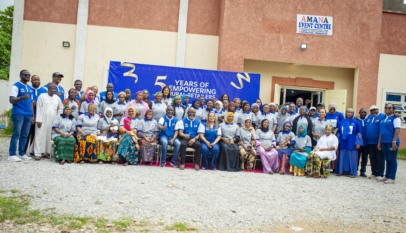
Some time in April 30, 2026, twenty young Nigerians graduated from the Flowergate Technical Training Centre to sum the figure to it’s present number.
According to Nestle Nigeria, the Nestlé Technical Training Centre was part of Nestlé Needs YOUth, Nestlé’s global youth initiative launched in 2013 to equip young people with skills, experience, and opportunities to access meaningful employment, with a goal of reaching 10 million youths worldwide by 2030.
The twenty young trainees from the Flowergate Technical Training Centre, formed part of the milestone that reinforced the company’s long-standing commitment to youth empowerment through the development of technical and vocational skills among young Nigerians.
The investment angle
With an investment of over ₦6 billion, the programme delivers an intensive 18-month curriculum that combines theoretical learning with practical engineering training.
The curriculum provides comprehensive instruction in food technology, engineering, and manufacturing operations, equipping trainees with the technical expertise required to thrive in today’s industrial environment. This culminates in the internationally recognized City and Guilds of London Technicians’ Certification, significantly enhancing participants’ employability within Nigeria and beyond.
Wassim Elhusseini, Managing Director and Chief Executive Officer of Nestlé Nigeria, emphasized the alignment of the initiative with Nestlé’s core purpose: “At Nestlé, our purpose is to unlock the power of food to enhance quality of life for everyone today and for generations to come. It is this purpose that drives initiatives such as this.
Through the Nestlé Technical Training Centre, we are investing in the future of our industry, our communities, and the thousands of talented young Nigerians ready to grow and excel.
Corroborating Elhusseini, the Country Human Resource Manager Shakiru Lawal, highlighted Nestle’s broader impact of the Nestlé Needs YOUth initiative: “At Nestlé, our youth development work across Central and West Africa is guided by a simple belief: unlocking potential through skills, opportunity, and real pathways to work.
Through structured training, apprenticeships, and strong industry partnerships, we are helping young people build the skills they need to succeed in today’s workforce while also strengthening the future of our industry.
In Nigeria, this commitment comes to life through the Nestlé Technical Training Centres.
With an impressive 98% of graduates moving into employment within Nestlé, the programme has become a key talent pipeline for the business. Most importantly, it reflects the company ‘s purpose of creating shared value through industry knowledge, practical skills, and meaningful job opportunities.
The MYOWBU initiative
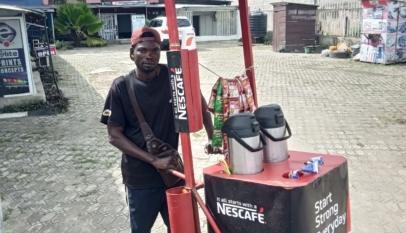
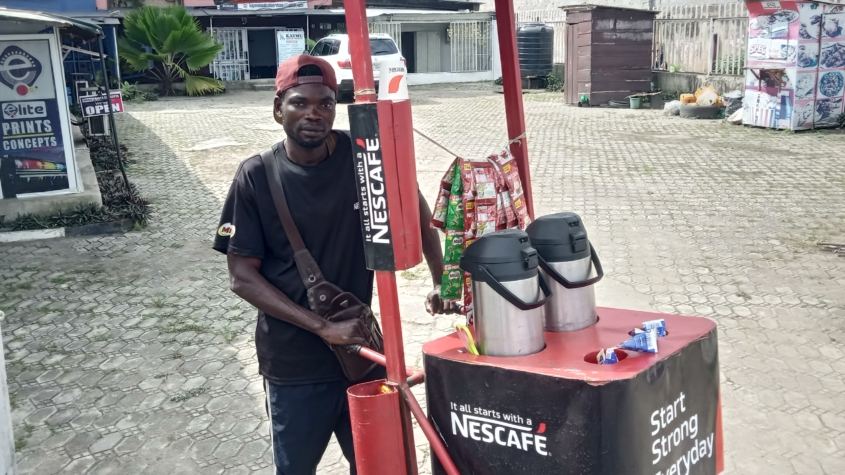
At the My Own Business (MYOWBU) front, Nestle Nigeria in partnership with Nestle Professionals continue to invest in supporting entrepreneurs, offering not just assets, but access, skills, mentorship, and a path to ownership.
The initiative which began with a few young people has evolved into a powerful model for sustainable entrepreneurship, and shared value creation, establishing over 1,500 employment opportunities across Nigeria, equipping youth with fully branded pushcarts, shoulder kits, and essential start-up resources.
Testimonial
For Maduabuchi Stephen, a native of Abo Omege in Ebonyi state, the MYOWBU initiative may have been designed for him.
Though, he is not a direct beneficiary but a third party agent, Stephen, a married man with children said for three years he has been able to sustain himself and family from the proceeds of the Nescafé pushcarts, in addition to other menial businesses he is able to add to it.
In a chanced interview with this reporter, (when I ran into him in the Alimosho axis in Lagos State) Maduabuchi said, the business keeps him away from idleness and also affords him the opportunity to fend for his family.
As a third party carrier, according to him, he operates the business through an agent to whom he makes returns to after each business day.
“Sales is fair especially during rainy seasons and in the mornings. I make between N7,000 and N10,000 averagely on each day, after deducting all the expenses and cost incurred, including the returns i make to the person to whom I have access to this business” Maduabuchi said.
Haven operated the business for three years, he said he has been able to accumulate money to rent a shop for a palm oil supply business for his wife with the mind to scale as more funds come in.
“Sales are better during the morning because of the wether and during rainy season. But, during the day sales drop because of the sun. When that happens I switch to my ice-cream business- knowing that there are mouths to feed.
“I feel comfortable in the business. It gives flexibility and the opportunity to be able to switch when the wether condition changes,” he noted adding that he could still make more money if he gets more support”.
Score card
For people like Maduabuchi, a simple opportunity of engagement is all that is required to get by, at least from a point. Which may vary for different people.
In the case of Samuel Oladokun, one of the graduates of the Flowergate Technical Training Centre class of 2026, he pointed that the program has left a powerful mark with him.
“This training has gone far beyond building our technical skills. It has shaped our discipline, strengthened our confidence, and prepared us in a real and practical way for us to perform in demanding industrial environments. As graduates, we are leaving this Centre not only with technical competence, but also with a stronger sense of responsibility, teamwork, and professionalism. We are grateful for the opportunity we have been given, and we step forward with confidence, ready to contribute meaningfully, grow in our careers, and make a positive impact wherever we find ourselves.”
Professor Abayomi Adelaja Arigbabu, Commissioner for Education, Science and Technology, Ogun State, also commended Nestlé Nigeria for its continued support of government efforts in youth empowerment and skills development.
The Nestlé Technical Training Initiative remains a key pillar of Nestlé Needs YOUth in Nigeria, a global initiative focused on capacity building for young people. Other programmes under this umbrella include the Nestlé Nigeria Youth Development Programme, Nesternship, and the Alliance for YOUth, all aimed at improving employability and creating opportunities for young Nigerians to thrive.
Conclusion
Economic stakeholders say the many engagement platforms put together by Nestle Nigeria among other corporate organisations have had many tremendous impact on the youth and it has in a great extent shifted their attention from crime related activities.
Academia.edu says by equipping young people with technical skills and microcredit grants allows them to start small businesses. Studies in states like Bauchi and Benue confirm that areas with active empowerment programs see measurable drops in petty theft, burglary, and youth involvement in violent crimes.
Referencing available data, the platform observed that approximately 64.9% of engaged Nigerian youth participate in localized conflict prevention, successfully de-escalating up to 76.2% of household and civil conflicts. Working through channels like the Police Community Relations Committees (PCRC), youth engagement bridges the gap of mutual distrust between law enforcement and local communities.
“With the amount of training and empowerment initiatives, young people are increasingly moving away from being perceived as perpetrators and are becoming partners in local security and economic growth,” according to Academia.edu.
Do you have a compelling story to tell? Contact us via our email: espinewsng@gmail.com or call/WhatsApp on 08032519246.